Saturday, February 17, 2024

Core Workout at Home for Women without Equipment | #coreworkout #absworkout #flatstomach #exe...


Certainly! Here's a core workout routine for women that you can do at home without any equipment:

Warm-Up (5-10 minutes):

  • Start with a dynamic warm-up to prepare your body for exercise. This could include jogging in place, jumping jacks, arm circles, leg swings, and torso twists.

Main Workout:

  1. Plank (Hold for 30-60 seconds):

    • Start in a push-up position with your hands directly under your shoulders and your body in a straight line from head to heels.
    • Engage your core muscles and hold this position, focusing on keeping your body stable and aligned. Avoid sagging your hips or lifting your butt too high.
  2. Reverse Crunches (12-15 reps):

    • Lie on your back with your knees bent and feet flat on the floor.
    • Place your hands by your sides or under your hips for support.
    • Engage your core and lift your legs towards your chest, rolling your pelvis off the floor.
    • Slowly lower your legs back down to the starting position with control.
  3. Russian Twists (12-15 reps each side):

    • Sit on the floor with your knees bent and feet lifted off the ground, balancing on your sit bones.
    • Clasp your hands together in front of your chest or hold a weight for added resistance.
    • Twist your torso to the right, bringing your hands or weight towards the floor beside your hip.
    • Twist back to the left and bring the hands or weight to the other side.
  4. Bird Dogs (10-12 reps each side):

    • Start on your hands and knees with your wrists under your shoulders and knees under your hips.
    • Engage your core and extend your right arm forward and left leg back, keeping your hips level.
    • Hold for a moment, then return to the starting position and switch sides.
  5. Mountain Climbers (12-15 reps each side):

    • Start in a plank position with your hands directly under your shoulders and your body in a straight line.
    • Engage your core and bring your right knee towards your chest, then quickly switch legs, bringing your left knee towards your chest.
    • Continue alternating legs in a running motion while maintaining a strong plank position.
  6. Bicycle Crunches (12-15 reps each side):

    • Lie on your back with your hands behind your head and knees bent.
    • Lift your shoulders off the ground and bring your right elbow towards your left knee while straightening your right leg.
    • Twist your torso and bring your left elbow towards your right knee while straightening your left leg.
    • Continue alternating sides in a pedaling motion.

Cool Down (5-10 minutes):

  • Finish with a cooldown to stretch and relax your muscles. Perform static stretches such as cat-cow stretch, child's pose, seated forward fold, and spinal twist to release tension in the core muscles.

Remember to focus on maintaining proper form and breathing throughout each exercise, and listen to your body to avoid overexertion or injury. As you become stronger, you can increase the number of repetitions or add more challenging variations to your core workout routine.


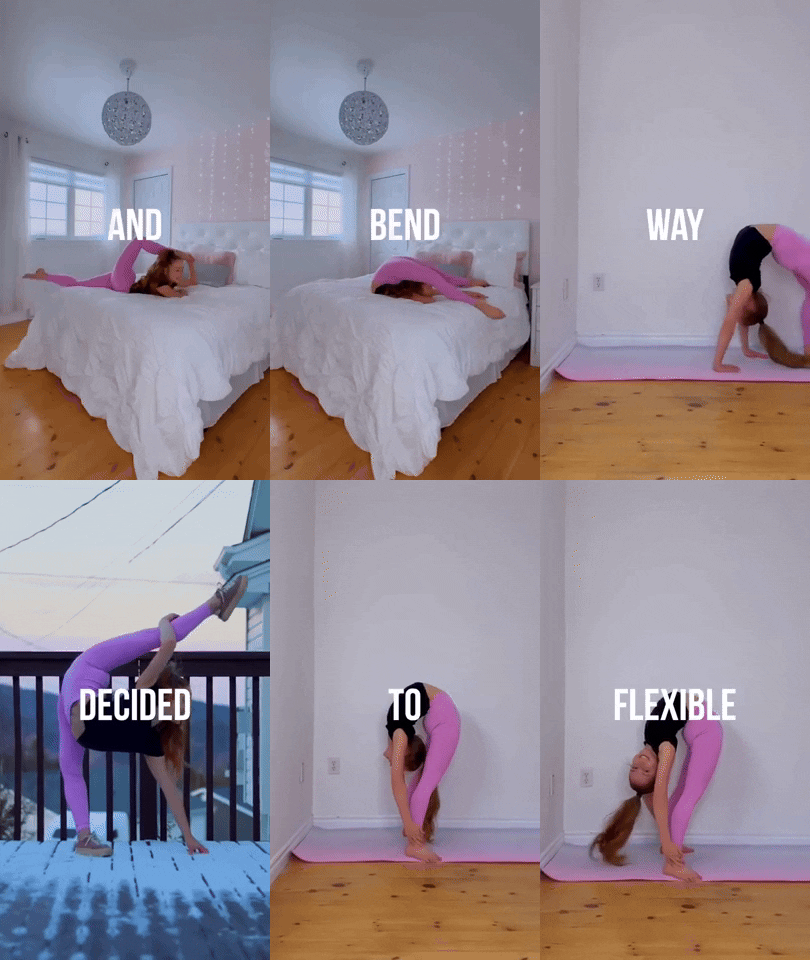
Click - Core Workout at Home

Sunday, February 4, 2024

At Home Workout Plan


  1. Fitness level: Are you a beginner, intermediate, or advanced exerciser?
  2. Goals: Are you looking to lose weight, build muscle, improve strength, or increase endurance?
  3. Equipment availability: Do you have any weights, resistance bands, exercise mats, or other equipment available?
  4. Time commitment: How much time can you realistically dedicate to exercise each day or week?
  5. Preferences: Do you prefer bodyweight exercises, weight training, cardio, or a combination? Are there any activities you particularly enjoy or dislike?

Once I have this information, I can recommend specific exercises, create a sample workout schedule, and offer modifications based on your needs.

In the meantime, here are some general tips for creating an effective at-home workout plan:

  • Start with a warm-up: Spend 5-10 minutes getting your heart rate up and your muscles loose with light cardio and dynamic stretches.
  • Incorporate a variety of exercises: Target different muscle groups with exercises like squats, lunges, push-ups, rows, planks, and core work.
  • Focus on proper form: This is essential to prevent injuries and maximize results. Don't be afraid to use lighter weights or bodyweight variations if needed.
  • Challenge yourself: As you get stronger, gradually increase the difficulty of your workouts by adding more weight, reps, sets, or decreasing rest time.
  • Listen to your body: Take rest days when needed and don't push yourself to the point of pain.
  • Cool down: Spend 5-10 minutes stretching to help your muscles recover.
  • Stay motivated: Find a workout buddy, listen to music, or track your progress to stay engaged.

With dedication and consistency, you can achieve your fitness goals at home!


At Home Workout Plan


Saturday, January 20, 2024

12 Best Yoga Poses for Weight Loss


Yoga is a holistic practice that can help with weight loss by increasing mindfulness, reducing stress, and improving overall fitness. While any form of yoga can contribute to weight management, specific poses can be particularly effective in enhancing calorie burn and building strength. Here are some of the best yoga poses for weight loss:

1. Sun Salutations (Surya Namaskar): Sun Salutations are a series of flowing postures that increase heart rate and engage multiple muscle groups. They are an excellent warm-up or standalone sequence for weight loss.

2. Warrior Poses (Virabhadrasana I, II, III): The Warrior series helps tone and strengthen the legs, core, and upper body. These poses engage major muscle groups and build stamina.

3. Chair Pose (Utkatasana): Chair pose works the quadriceps, glutes, and core muscles. It's a great posture for strengthening the lower body and improving balance.

4. Boat Pose (Navasana): Boat pose is fantastic for building core strength and toning the abdominal muscles. It also improves balance and concentration.

5. Plank Pose: Plank is a full-body workout that targets the core, arms, and legs. It's excellent for strengthening the core and improving overall stability.

6. Bridge Pose (Setu Bandha Sarvangasana): Bridge pose opens the chest, stretches the spine, and strengthens the glutes, hamstrings, and lower back.

7. Downward-Facing Dog (Adho Mukha Svanasana): Downward dog is a fundamental yoga pose that engages the entire body. It helps improve flexibility, balance, and strength.

8. Camel Pose (Ustrasana): Camel pose is a backbend that stretches and strengthens the spine, shoulders, and chest. It's effective in burning calories and improving posture.

9. Twisting Poses (e.g., Bharadvajasana): Twisting poses aid digestion, detoxify the body, and engage the core. They are excellent for abdominal toning.

10. Legs Up the Wall (Viparita Karani): This restorative pose can help reduce stress and anxiety, which can contribute to overeating. It's an ideal pose for relaxation and weight management.

11. High Lunge (Utthita Ashwa Sanchalanasana): High lunge engages the legs, hips, and core. It's an excellent pose for building strength and balance.

12. Seated Forward Bend (Paschimottanasana): This pose stretches the spine and hamstrings and can be part of a calming sequence that helps control cravings and emotional eating.

Remember that the key to successful weight loss through yoga is consistency and a holistic approach that includes a balanced diet and an active lifestyle. It's also beneficial to practice yoga under the guidance of a certified instructor to ensure proper form and technique.


Is the Stairmaster a Good Workout?

Is the Stairmaster a Good Workout?

 Yes, the StairMaster is a highly effective workout for cardiovascular fitness and lower body strength. The StairMaster, or stair climber, simulates climbing stairs and engages various muscle groups, primarily targeting the lower body, including the quadriceps, hamstrings, glutes, and calves.

Here are some benefits of using the StairMaster:

  1. Cardiovascular Endurance: Stair climbing is an excellent aerobic exercise that elevates your heart rate, improving cardiovascular endurance and stamina.


  2. Calorie Burning: The StairMaster is a calorie-burning workout, making it beneficial for weight management and fat loss. The number of calories burned depends on factors like intensity, duration, and individual fitness levels.


  3. Lower Body Strength: Climbing stairs engages and strengthens the muscles of the legs and buttocks. It can contribute to improved muscle tone and endurance.


  4. Low Impact: Compared to some other forms of cardio exercise, the StairMaster is relatively low impact. This makes it gentler on the joints, making it suitable for a wide range of individuals, including those with joint concerns.


  5. Versatility: Many StairMaster machines allow users to adjust the resistance level and speed, providing a customizable workout to match different fitness levels and goals.


  6. Time Efficiency: A StairMaster workout can be time-efficient. In a short amount of time, you can achieve a challenging and effective workout.

It's important to use proper form when using the StairMaster to minimize the risk of injury. Additionally, as with any exercise program, it's advisable to consult with a healthcare professional or fitness expert, especially if you have pre-existing health conditions.

Incorporating variety into your overall fitness routine is also recommended to ensure a balanced workout. This might include a combination of cardio exercises, strength training, and flexibility exercises.


Saturday, January 13, 2024

Lower Ab Workouts: What Exercise is Best for Lower Abs?


What Exercise is Best for Lower Abs?


Targeting the lower abs can be challenging, but incorporating specific exercises into your workout routine can help strengthen and tone this area. Here are some effective lower ab workouts:

  1. Reverse Crunches:

    • Lie on your back with your hands by your sides.
    • Lift your legs off the ground, bringing your knees toward your chest.
    • Contract your lower abs, lift your hips off the ground, and bring your knees toward your face.
    • Lower your legs back down without letting them touch the ground. Repeat.
  2. Leg Raises:

    • Lie on your back with your legs straight and your arms by your sides.
    • Lift your legs off the ground until they are perpendicular to the floor.
    • Lower your legs back down without letting them touch the ground.
    • Keep your lower back pressed into the floor throughout the movement.
  3. Mountain Climbers:

    • Start in a plank position with your wrists directly under your shoulders.
    • Bring one knee toward your chest and then switch, as if you're "climbing."
    • Keep your core engaged and maintain a steady pace.
  4. Bicycle Crunches:

    • Lie on your back with your hands behind your head and legs lifted off the ground.
    • Bring one knee toward your chest while simultaneously twisting your torso to bring the opposite elbow toward that knee.
    • Repeat on the other side in a pedaling motion.
  5. Scissor Kicks:

    • Lie on your back with your hands under your hips and legs extended.
    • Lift your legs a few inches off the ground.
    • Cross one leg over the other in a scissor-like motion, and switch quickly.
  6. Hanging Leg Raises:

    • Hang from a pull-up bar with your legs straight.
    • Lift your legs upward, keeping them straight, until they are parallel to the ground.
    • Lower your legs back down without swinging.
  7. Plank Hip Dips:

    • Start in a forearm plank position.
    • Rotate your hips to one side, dipping them toward the floor.
    • Return to the center and then dip to the other side.
  8. Pulse Ups:

    • Lie on your back with your hands under your hips and legs extended.
    • Lift your legs off the ground and pulse them upward in small, controlled movements.

Remember to engage your core throughout these exercises, and focus on controlled movements rather than speed. Consistency is key, and combining these exercises with a well-rounded fitness routine and a healthy diet will contribute to overall abdominal strength and definition. If you have any existing health concerns, consult with a fitness professional or healthcare provider before starting a new workout routine.


What is the Cause of Difficulty of Sleeping?

  Difficulty sleeping, also known as insomnia, is a common issue that affects millions of people worldwide. Whether it’s trouble falling asl...